Guide
Night Driving: Seeing The Thing Before It Sees You
The unlit run out past Clonsilla toward Ongar is an easy road by day and a different animal once the light goes. The dark does not make a road much more dangerous. It makes you slower to see the danger, which comes to the same thing if you have not adjusted for it.
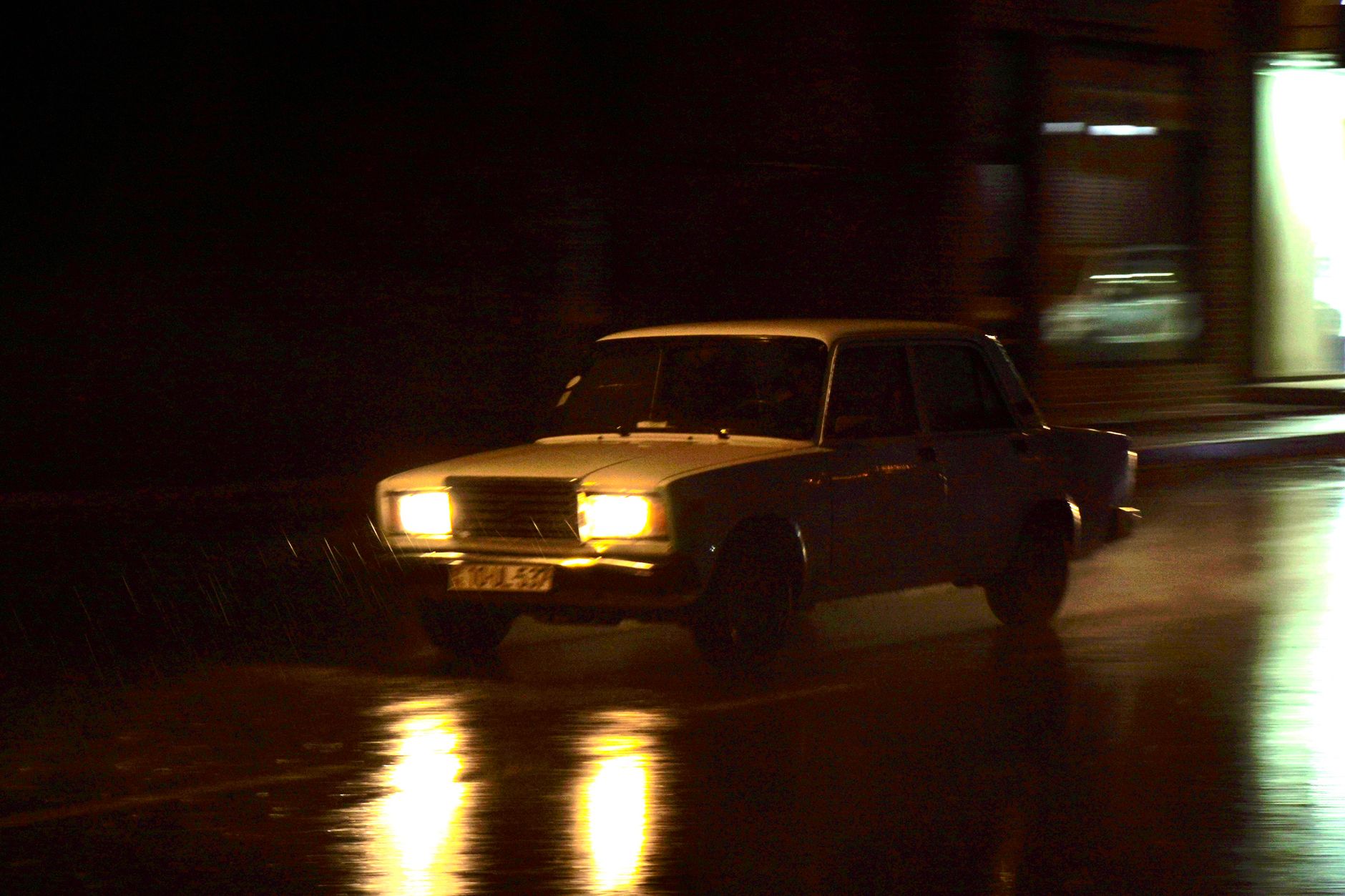
Night driving is one of the later EDT lessons, and for good reason. It asks you to trust what you cannot fully see, and to slow down enough that your eyes get a chance to keep up with the road.
Drive to your lights, not to the limit
This is the single rule that matters. You should be able to stop inside the distance your headlights actually show you. On a dark road on dipped beams, out where the street lighting stops, that distance is shorter than you think, so the speed limit becomes a ceiling you rarely touch, not a target to hit. A bend you do not know, a wet surface, a low wall right where the light gives out. If you cannot stop in the lit distance, you are going too fast for the dark, whatever the sign on the pole says.
Using the beams
Full beam on an empty road buys you range, and you dip it the moment you see oncoming lights or you are close behind another car, so you do not dazzle anyone. Get quick at the switch. On lit town roads around Blanchardstown, dipped beams are plenty. The trap is leaving full beam on out of pure laziness and blinding a driver coming the other way, who then cannot see you either. Two blind drivers closing on each other is exactly the situation the dark sets up if you let it.
Night, in short
- Speed
- Stop within the distance your lights show. That is the real limit after dark.
- Full beam
- Use it when clear, dip it for oncoming traffic and when following.
- Dazzle
- Look to the left edge of the road, do not stare into oncoming lights.
- Screen
- Clean glass, inside and out. Smears turn every light into a starburst.
When someone dazzles you
An oncoming driver leaves the full beam on, or a set of those harsh modern lights comes straight at you. Do not stare into it and do not brake in a panic. Drop your eyes to the left edge of your own lane and use it to steer straight until they pass. Your night vision comes back in a second or two. Fighting the glare head-on is how people drift across the road.
Everything hard about night driving traces back to one thing. You can see less, so you must give yourself more time. More time means less speed. Slow the car down and the dark stops being an enemy and goes back to being just a quieter version of the same road.
Clean glass helps more than people expect, because a smeared windscreen turns every headlight on the Ongar road into a starburst. Night work sits in the last block of the twelve EDT lessons, once your basic control is automatic, because in the dark you want your eyes free to read the road, not busy managing the clutch.